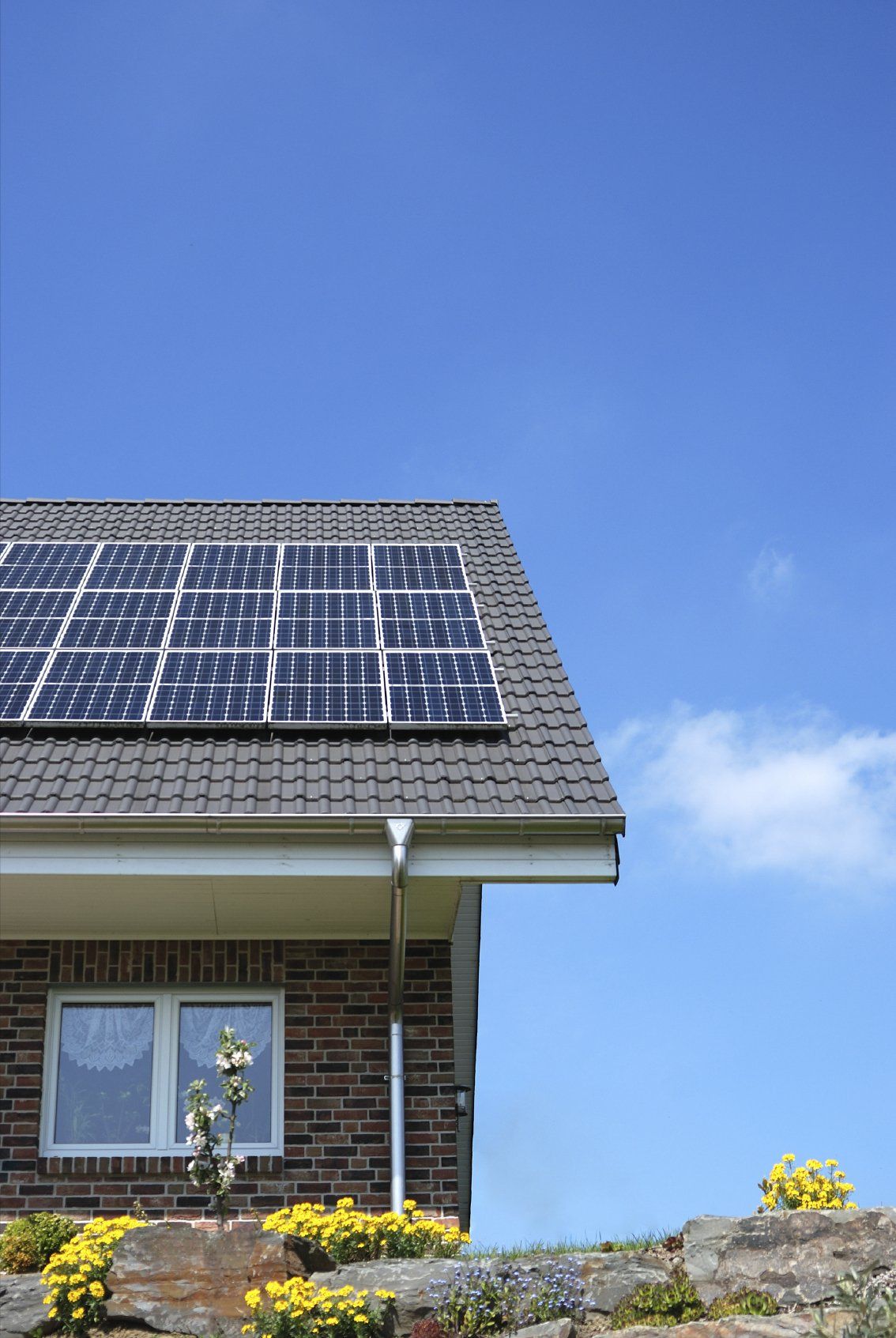
Solar panels with Homepac
Heat pump and photovoltaic panels, a perfect combination?
Combining a heat pump and photovoltaic panels is an ideal solution for heating and cooling a building, offering energy efficiency, environmental responsibility, and cost savings. This synergy maximizes energy efficiency by harnessing free solar energy to power the heat pump.
- Energy self-sufficiency: Photovoltaic panels produce electricity from the sun, allowing you to reduce your reliance on the electrical grid. This electricity can be used to power a heat pump and cover some or all of your heating or cooling needs.
- Energy savings: The combination of a heat pump Installing photovoltaic panels saves energy. A heat pump uses electricity to transfer heat from a cold source to a hot source. By using electricity generated locally by photovoltaic panels, you reduce your energy consumption from non-renewable sources.
- Reduction in CO2 emissions: By using a heat pump powered by photovoltaic panels, you reduce carbon dioxide (CO2) emissions generated by traditional heating systems that use fossil fuels. This contributes to combating climate change and preserving the environment.
- Seasonal complementarity: Photovoltaic panels generally produce more electricity during sunny months, while heating needs are greater during colder months. However, it is possible to store excess electricity in batteries or sell it back to the grid, and then use grid electricity when solar production is insufficient. In this way, the combination of a heat pump and photovoltaic panels can adapt to seasonal variations.
- Financial incentives: Financial incentives are available, such as government green energy subsidies like Énoprime and Klimabonus, as well as municipal grants, for installing photovoltaic panels and eco-friendly heating systems like heat pumps. These incentives can help you recoup your investment more quickly.
It is important to note that the combination of a heat pump Installing photovoltaic panels requires proper planning and design. It is recommended to consult renewable energy experts or qualified installers to assess your specific needs and design a system tailored to your situation.

Why should I combine a heat pump with photovoltaics?
Combine a heat pump with photovoltaic panels to:
- Reduce your energy dependence by producing your own green electricity.
- Save energy by using solar electricity to power your heat pump.
- Reduce CO2 emissions by replacing fossil fuel heating systems with a clean solution.
- Taking advantage of the seasonal complementarity between solar production and heating needs.
- Benefit from financial incentives for installing eco-friendly solutions and make your investment profitable faster.


Can I cover the energy consumption of a heat pump with photovoltaics?
Yes, it is possible to cover part, or even all, of the energy consumption of a heat pump with photovoltaic/solar panels:
- Photovoltaic panels can generate electricity that can be directly used to power a heat pump.
- Solar electricity production depends on the capacity of your photovoltaic panels and the amount of sunshine in your region.
- By correctly sizing your solar installation, you can adapt electricity production to meet the energy needs of your heat pump.
- Good insulation and optimal energy efficiency of your heat pump will help to further reduce your energy consumption.
- You can also consider using storage batteries to store excess electricity and use it later when solar production is insufficient.
BLOOMBERG'S RANKING OF THE BEST SOLAR PANELS
(BLOOMBERG STUDY 2022/2023)
"For those considering adopting photovoltaic panels, choosing the brand is a crucial step. With a market offering various brands of solar panels, from Asian, European or American origins, determining the criteria for selecting photovoltaic panels suitable for individual self-consumption is paramount.
There are many factors to consider when choosing a brand of solar panels:
• Efficiency : Measuring the ability of solar panels to convert light into electricity is essential. Opting for more efficient solar panels ensures better electricity production with a smaller surface area.
• Sustainability : Resistance to weathering, temperature variations and wear is a key criterion for a prolonged lifespan of the panels.
• Performance guarantee: The strength of the performance guarantee, which varies from one manufacturer to another, testifies to the quality of the solar panels.
• Price : Consider not only the initial cost, but also the long-term costs of the installation.
Other aspects to consider:
Quality of solar modules; Number and technology of solar cells (monocrystalline, polycrystalline); Aesthetics and color of the frame and solar panels
Using these criteria, you can search for the solar panel brands best suited to France in 2023.
The choice of solar panel type is also crucial, including monocrystalline, polycrystalline and amorphous types.
Monocrystalline panels,
are recognized for their high efficiency and durability, offering optimal performance in high light conditions.
Polycrystalline panels,
offering good cost-effectiveness and decent efficiency in low light conditions, are slightly cheaper but less efficient than monocrystalline lenses.
> Amorphous panels,
Although affordable, their effectiveness remains lower.
> Half-cut solar panels
are a recent innovation, cutting solar cells in half to improve the overall efficiency of the panel, thus reducing electrical losses and providing a more uniform distribution of voltage and electrical current.
To assess the quality of manufacturers, the Bloomberg 2022 ranking is a global benchmark.
Tier 1 rated solar panel manufacturers are renowned for their reliability and experience in producing superior quality panels.
Among these manufacturers are brands such as:
- SunPower,
- Longi Solar
- Trina Solar
- Jinko
- JA Solar,
- Canadian Solar,
- Risen Energy,
- Talesun,
- Suntech,
- Chint,
- LG Electronics,
- Sharp,
- Seraphine,
- Znshine Solar,
- Winaico,
- Rec Group,
- Sumec,
- Solar
are recognized, while Hyundai and Bourgeois are also quality brands.
The top 6 solar panel brands in the Bloomberg 2022/23 ranking are as follows:

Top 10 questions about solar panels
What is the difference between a micro-inverter and a photovoltaic optimizer?

Microinverter VS Optimizer
If you're considering installing a photovoltaic system on your roof, you may have heard of two common technologies: microinverters and optimizers. While they have similar functions, they differ in their approach to optimizing solar energy production.
1️⃣ Micro-inverter: A microinverter is an electronic device installed on each individual solar panel in a photovoltaic system. Its role is to directly convert the direct current (DC) produced by the solar panel into alternating current (AC), which can be used in household electrical installations or fed back into the power grid. Each solar panel with a microinverter operates independently of the others, meaning that the performance of one panel does not affect the performance of the other panels.
The advantages of micro-inverters are as follows:
- Maximizing energy production: Micro-inverters optimize energy production by independently adjusting each solar panel according to its specific sunlight.
- Reliability: In the event of a micro-inverter failure, the other solar panels continue to function normally.
- Individual monitoring: Micro-inverters allow individual monitoring of each solar panel, thus providing detailed information on system performance.
- Maximizing energy production: Optimizers adjust DC voltages and currents to optimize the energy production of each solar panel.
- Reducing energy losses: Optimizers help reduce energy losses caused by shading conditions or solar panels of varying quality.
- Advanced monitoring: Optimizers allow monitoring of the performance of each solar panel individually, providing detailed data on the entire system.
2️⃣ Optimizer: An optimizer is an electronic device connected to each solar panel in a photovoltaic system, but it works in tandem with a central inverter. The optimizer maximizes the energy output of each solar panel by adjusting the DC voltages and currents according to each panel's specific conditions. The energy produced by each panel is then routed to the central inverter, which converts it to AC current.
The advantages of optimizers are as follows:
In summary, the main difference between microinverters and optimizers is that microinverters directly convert direct current (DC) to alternating current (AC) at each solar panel, while optimizers adjust the DC voltages and currents before the AC conversion by a central inverter. Both technologies optimize energy production in situations where solar panels may be subjected to varying conditions. The choice between these two technologies will depend on the specific needs of each solar installation.